
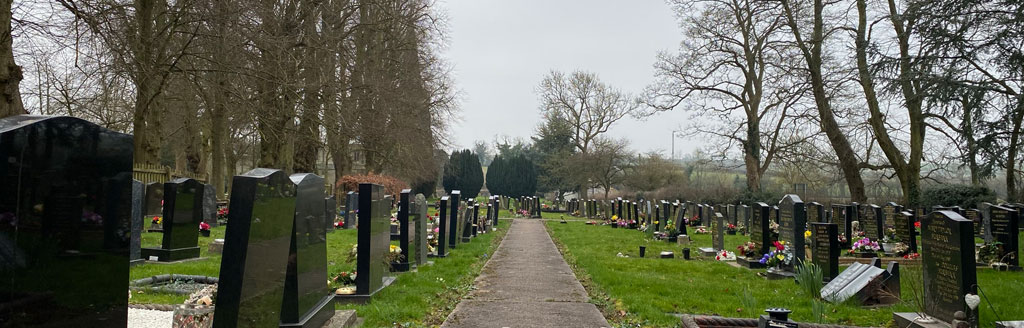
He looked at them and narrowed his eyes against a sharp wind which cut across the adjoining fields.
Peter Griggs; January 12th, 1970 – June 19th, 2018.
Duncan Ryder, November 3rd, 1969 – September 24th, 2018.
And now,
Gary White, December 30th, 1970 – January 18th, 2019.
Dropping like flies, thought Simon.
Several other headstones separated the three men, this was a large village after all, but he didn’t notice them. All he saw were the three names, as if the gang of boys that he went to school with were standing there before him, just metres apart.
He coughed against the biting winter air and wondered what kind of lives the three had led.
Had they moved away?
Unlikely, given that they were buried in this backwater. It wasn’t the kind of village people were repatriated to posthumously. There was no poetry written in the fields. No blue plaques on the walls. Not even any real history to speak of. First agriculture, then mining, and now? Might luck out with an Amazon. Poor bastards.
No, people were buried in this graveyard because of geography. Because this was where they had stood, and eventually fallen. Either their lives had had a paucity of opportunity, or they lacked the will or luck to leave. Whichever the reason, it meant that they succeeded in becoming nothing more than the latest iteration of a family that had lived there for generations.
That, of course, explained why the boys had drifted apart. As scrawny, ill-fashioned kids, they had been close once, back when the only thing that separated them was their preference in ice-cream. But academic achievement had segmented them at eleven, sporting achievement (or absence of it in Simon’s case) had broadened the distance, and finally the development of social cliques – girls, in particular – had cemented, what came to feel like a chasm.
So much so that when Simon returned to the town from university, or later, as an adult, when he came back to visit his parents, the now grown boys could barely force a polite smile or nod as they passed each other in their daily lives. It was as if they were ashamed of the carefree naivety of those long summer days they spent wandering the area together.
Of course, Simon had escaped at the first opportunity. Drawn to the energy and challenge of the capital city, he had wanted to test his metal. Well, that was what he’d told himself. However, two failed businesses and a broken marriage would suggest that he’d escaped nothing, failed all the tests, and merely changed the backdrop to his life’s problems.
‘Did you know them well?’
The voice punctured Simon’s introspection. He looked up to see the vicar, a short haired, bespectacled woman.
‘Went to school together,’ said Simon. ‘Way, way back.’
He pointed to the other two gravestones. ‘We all did.’
The vicar followed his gaze to the other names, then gave a long movement of her head.
‘I see.’
‘I hadn’t spoken to them in nearly forty years, if I’m honest.’
Simon checked to see if there were any other mourners in earshot. He still felt an air of resentment from the vaguely familiar faces he met when he returned there. Had felt it again during the service today.
‘But Gary was my first proper friend, y’know? My first best friend. You only get one of those, don’t you?’
The vicar didn’t react immediately. She studied the gravestones, then opened her mouth to speak. But no words came. She pursed her lips, almost annoyed, as if she had just restrained herself from imparting a secret. After a few more moments of thought, she replied.
‘Proverbs tells us, “A man of many companions may come to ruin, but there is a friend who sticks closer than a brother.”‘
The words cut deeper than they had any right to. Simon felt a welling of remorse, even guilt. As if in answer to his contrition, the wind picked up, bringing with it flecks of snow. Simon clenched his gloved hands.
‘That’s a bit of a wheeze you have there,’ the vicar said.
The comment caught Simon off guard, but now that she mentioned it his breath was rasping a little.
‘Just a cold. Had it for a week or so.’
The vicar reached behind her apron and pulled out a small pack of lozenges. She offered one to Simon.
‘You might want to get that checked, my son,’ she said.
Editorial
How do you overcome a word count issue? By breaking the story into multiple parts, of course!
Cheating? Maybe.
I suppose I could have condensed this to one piece, but to have done so would be to under-develop a story I really love. I wanted to do it justice.
And it works. You’ll see that when I publish the second part.
 Pl@tpav - Telling Stories