
He looked at them and curled his top lip, exposing a receded, tarry gumline, from which protruded a set of unnaturally long, and quite terrifying, nicotine glazed incisors.
‘Utter plebs,’ he said, raising the heavy crystal glass to his lips. ‘Who the hell do they think they are?’
Through the windows of the leader’s chambers, Lord Charles deVicce, hereditary peer and, childless, the last of twelve generations to occupy the title, was afforded a perfect vantage point over the stretch of tarmac that ran from Abingdon Street into Parliament Square. Tarmac that was currently inhabited by hundreds of brightly coloured protesters.
‘Fucked if I can read their placards,’ he said, wearily. ‘What are they complaining about this time?’
Straight backed, black tied, and sober, Tristan Sobers, Private Secretary, watched the demonstration via a nearby newsfeed.
‘They’re protesting the Police, Crime, Sentencing and Courts Bill, sir,’ he said.
On hearing that, deVicce turned to face him.
‘Really?’
‘Afraid so.’
deVicce reflected on the information for a moment, then said, ‘Bold move that, I did tell her the timing was questionable. She might have trouble.’
‘On the streets, you mean?’
‘Oh naturally, that’s a given.’
‘So they’ve called in the usual ensemble?’
‘What, Garland’s mob? I’m sure the call was made, given the nature of the bill, but I’d imagine that it wasn’t necessary. They’ve been penned in for over twelve months; no football; no pubs; they’ll be chomping at the bit.’
Looking beyond the throng, deVicce said, ‘Bet they’re already out there somewhere, coked up to the eyeballs. Rabid little bastards. It’ll be like a bad day in Belfast come midnight.’
deVicce turned away from the procession and made his way to an ornate bottle, half empty, on his desk.
‘Of course, that’s what she wants,’ he said, refilling his glass. ‘That’s the beauty of the legislation; if the masses roll over and play dead then she gets her bill passed without any objections; if they riot then she can justify that the law is needed because “the population is out of control.”‘
Sobers held out his glass for a refill. ‘The only question now is how many of them will object?’
‘Quite,’ deVicce replied, pouring him a smaller measure than his own. ‘That’s where she might have trouble. See, we can handle that rabble outside, but the risk is that this bill might do the unthinkable; stir the slumbering cash cow, awaken the Kraken that is the middle classes. If that happens, we could end up with an Iraq situation.’
‘A million on the streets?’ Sobers raised his eyebrows skyward. ‘We only just got away with that one.’
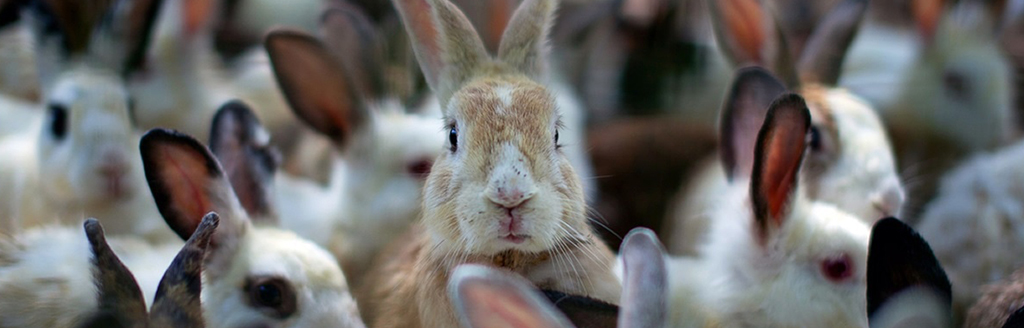
‘My point exactly.’ deVicce took up his vantage point again. ‘Look at them, they’re like fucking rabbits hopping around out there.’
Sobers turned the cognac around in his glass. It was the only reason he came into this chamber. So good, it was worth sitting through deVicee’s frequent, and invariant, tirades for, the most current of which showed no signs of abating.
‘The only way they can manifest any kind of meaning from their tawdry existence,’ he said, ‘is to drown their plight every weekend in novelty boozes, spew their vapid thoughts on social media…’
He flared his nostrils.
‘…and rut.’
‘And football, sir,’ Sobers said, pandering to him. ‘Don’t forget their “beautiful” game.’
deVicce grumbled his contempt, and in doing so, loosened a ball of phlegm that rolled over and over in his throat as he continued.
‘Rabbits, I tell you. There’s no bloody difference, they’re vermin. Leave them unchecked and they run amuck, multiplying until there’s too many of them to adequately resource. Then you either shoot the fuckers…’
His voice lowered to a whisper.
‘Or you introduce calming measures.’
Sobers, now concentrating on his mobile phone, said, ‘Apparently there’s only around a thousand out there. Nowhere near enough to stop her bill.’
deVicce was still consumed by his own train of thought.
‘Invisible hand at the tiller,’ he said. ‘Past masters at it, built a bloody empire with it.’
Empire? On no, Sobers knew better than to let that line of diatribe unwind. Evasion was needed.
‘What’s that about rabbits, sir?’ he asked, nonchalantly.
‘Hmm?’ deVicce snapped back into the room. ‘Oh, population control, my boy,’ he said. ‘Like this new bill. Tough love. The more they struggle, the tighter the noose gets.’
‘Just like a snare, sir.’
‘Exactly that!’ deVicce watched the tail end of the protest pass by.
‘A societal snare,’ he said, with a sneer.
Editorial
(A note of caution – I’ve bought my soap box this week. Walk away now if you don’t want to hear exactly the kind of lazy, middle-class reactionary described above shouting into the ether!)
Far from wanting to come across as didactic or preachy, the ‘damned if you do, damned if you don’t’ dilemma surrounding the right to protest a bill curbing people’s rights to protest (in numbers more than one), seems to me laughably paradoxical.
Can I imagine a scenario where a rent-a-mob was employed to stir all this up, so that the government gets what it wants?
Can you not?
The new legislation claims to be addressing the type of activity carried out by Extinction Rebellion a few years ago. However, the scope that it ultimately gives the police is worryingly vague.
Extinction Rebellion were smart; they used the limited resources at their disposal and made people take notice of them. They were not violent. They were simply disruptive (a word currently lauded by innovators). They were rather like the suffragettes, you might say.
Crucially however, rather than simply chaining themselves to railings outside Number Ten and demanding ‘Votes for Women’, they broke the golden rule. They disrupted commerce. And that’s where this bill starts to take on a perspective that concerns me.
The following is taken from the Home Office’s website;
“This measure [bill] will broaden the range of circumstances in which the police can impose conditions on protests, including a single person protest, to include where noise causes a significant impact on those in the vicinity or serious disruption to the running of an organisation.”
Lobbyists have controlled the direction of the government for decades. Politicians have more and more ‘outside interests’ in the business community. Inevitably now, it seems the population – down to an individual level – will have fewer rights in which to voice their protests against any ‘organisation’.
George Orwell must be lying smug in his grave.
(Oh, and I couldn’t resist that last sentence!)
 Pl@tpav - Telling Stories